Austin STR License Application Guide: Step-by-Step Process for Type 1 & Type 2 Licenses
If you're planning to list an Austin property on any short-term rental platform, or you're already hosting and haven't confirmed your license status, this guide covers the complete application process for Type 1 and Type 2 STR licenses—what you need, what it costs, how long it takes, and where things commonly go wrong.
At Sora Stays, our full-service Austin Airbnb management includes STR license application support as part of onboarding. But whether you're managing your own property or working with a cohost, understanding the process yourself gives you a clearer picture of what's involved and why timing matters.
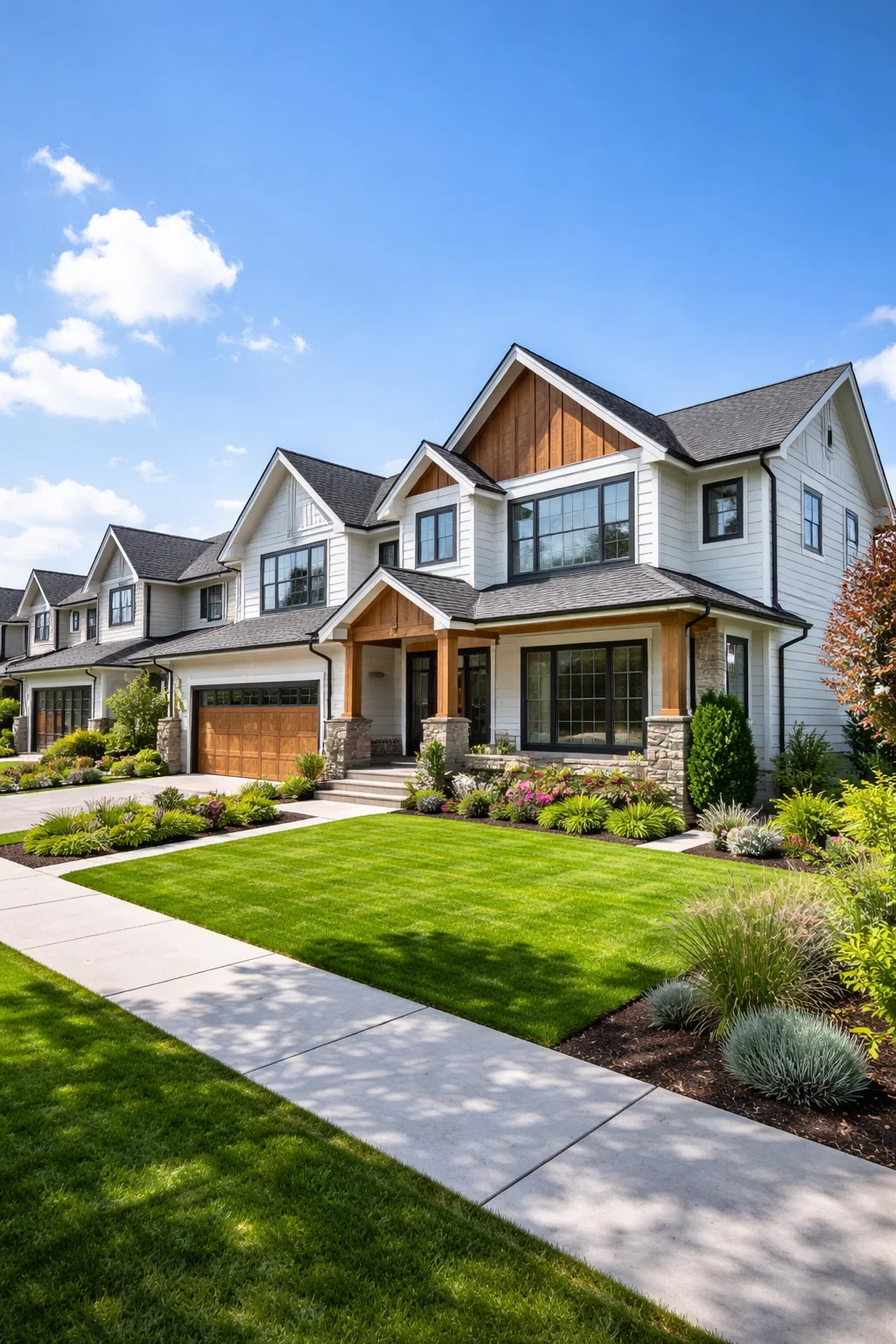
License Type Applies to Your Property
Before you fill out a single form, you need to know whether you're applying for a Type 1 or Type 2 license. The distinction determines your eligibility, your documentation requirements, and in some cases whether you can operate at all.
Top TLDR:
The Austin STR license application requires different documentation for Type 1 (owner-occupied) and Type 2 (non-owner-occupied) properties, with licenses now valid for two years and a non-refundable fee of approximately $900. Starting July 1, 2026, the City of Austin will notify platforms to delist any unlicensed Austin properties—making a valid license essential for uninterrupted bookings. Start your Austin STR license application as early as possible, as processing typically takes 8–12 weeks and backlogs grow as the enforcement deadline approaches.
Operating a short-term rental in Austin without a valid license isn't a gray area—it's a code violation that can cost $2,000 per day in fines, result in platform delisting, and make future licensing significantly harder to obtain. Yet thousands of Austin hosts are operating unlicensed, and the city is actively closing that gap. A major ordinance took effect October 1, 2025, updated the licensing framework, and as of July 1, 2026, platforms like Airbnb and Vrbo are required to verify and display valid license numbers—and remove unlicensed listings on the city's request.
If you're planning to list an Austin property on any short-term rental platform, or you're already hosting and haven't confirmed your license status, this guide covers the complete application process for Type 1 and Type 2 STR licenses—what you need, what it costs, how long it takes, and where things commonly go wrong.
At Sora Stays, our full-service Austin Airbnb management includes STR license application support as part of onboarding. But whether you're managing your own property or working with a cohost, understanding the process yourself gives you a clearer picture of what's involved and why timing matters.
Step 1: Confirm Which License Type Applies to Your Property
Before you fill out a single form, you need to know whether you're applying for a Type 1 or Type 2 license. The distinction determines your eligibility, your documentation requirements, and in some cases whether you can operate at all.
Type 1 (Owner-Occupied): Your property qualifies for a Type 1 license if you live there as your primary residence and rent out part or all of it for periods under 30 days. This includes renting your whole home while you're traveling, renting a spare bedroom while you're home, or renting a separate unit like a guest house or ADU on a property you occupy. Type 1 licenses are permitted across essentially all residential zones in Austin and represent the broadest category of eligible hosts.
Type 2 (Non-Owner-Occupied): Type 2 applies to investment properties where the owner doesn't live on-site. The rental must be of an entire dwelling, it must not be part of a multifamily structure, and the owner must not occupy it as a primary residence. Type 2 licenses were reinstated after a 2023 court ruling and are now available city-wide for single-family properties, subject to spacing requirements. If you own multiple STR properties, each separate site must be at least 1,000 feet from any other STR site you operate. Up to two units on a single site may be licensed.
Type 3 (Multifamily): If your property is a unit within an apartment building or condominium complex, that's a Type 3. This guide focuses on Types 1 and 2, but Type 3 applicants should be aware that density caps apply—no more than 10% of units in a residential-zoned building can be licensed at one time.
If you're unsure which type applies, the City's Development Services Department can clarify based on your property address and ownership situation. You can also review the Austin Airbnb laws and regulations overview for a fuller picture of how the license types fit into Austin's broader STR framework.
Step 2: Check Your Property's Eligibility Before Paying the Fee
The application fee is approximately $900 and is non-refundable. Submitting an application that gets denied means losing that money and starting over. Doing basic eligibility verification first is worth the time.
For Type 1 applicants, the city cross-references homestead exemption records to verify owner-occupancy. If your property has a homestead exemption on file with Travis County, that's strong supporting documentation. If it doesn't, or if you own multiple properties with homestead exemptions, the application reviewer may flag the filing. You can only claim one property as a homesteaded primary residence.
For Type 2 applicants, the spacing requirement is the most common surprise. Before applying, verify that no other licensed STR site you operate is within 1,000 feet of the subject property. The city measures this site-to-site, not unit-to-unit—so if you have a duplex with two units operating as STRs, that counts as one site for spacing purposes.
Both types require the property to be located within Austin's Full Purpose or Limited Purpose Jurisdiction. Properties in the Extra-Territorial Jurisdiction (ETJ) do not need a city license, and properties in the Limited Purpose Jurisdiction are required to obtain a license but are not subject to City of Austin Hotel Occupancy Tax.
Step 3: Gather Your Required Documents
One of the most common reasons applications stall is incomplete documentation. As of October 1, 2025, several requirements changed—including the removal of Certificate of Occupancy and proof of insurance as mandatory documents for new applicants and renewals. Review this current list carefully, as older guides may reflect outdated requirements.
For Type 1 applications, you will need:
- Completed Type 1 application form (available online via Austin's Finance Online portal)
- Copy of a government-issued photo ID (state driver's license or ID)
- Proof of property ownership (deed, tax record, or similar documentation)
- Floor plan of the property showing rooms and layout
- Site plan showing the property's footprint and any accessory structures
- Local contact designation — name and contact details for someone who can respond to complaints within two hours, located within the Austin Metro Area (Travis, Williamson, Hays, Bastrop, or Caldwell County)
- Application fee payment (~$900, non-refundable)
For Type 2 applications, you will need:
- Completed Type 2 application form
- Copy of government-issued photo ID
- Proof of property ownership
- Floor plan and site plan
- Local contact designation with Austin Metro Area residency
- Documentation confirming no owner-occupancy of the subject property
- Application fee payment (~$900, non-refundable)
A note on tenants: As of October 1, 2025, tenants may now apply for an STR license with written landlord permission. If you're a renter seeking to list your home, you'll need documented landlord authorization in addition to the standard application materials.
The application fee can be paid by check or money order made out to "City of Austin," or online through the Finance Online portal. Cash is not accepted.
Step 4: Submit Your Application
Austin offers two submission methods for properties in the Full Purpose Jurisdiction:
Online: Submit through Austin's Finance Online portal at financeonline.austintexas.gov/afo/. This is the faster and more convenient option for most applicants. Upload all required documents as PDFs or scanned files, pay the fee online, and receive confirmation of submission immediately.
In Person: Email STRlicensing@austintexas.gov or call 512-974-9144 to schedule an appointment at the Permit and Development Center (PDC), located at 6310 Wilhelmina Delco Drive, Austin, TX 78752.
For properties in the Limited Purpose Jurisdiction, contact the Development Services Department directly for submission instructions, as the online portal may not process these applications automatically.
When submitting, double-check that every required document is included. A missing item—even something as straightforward as a floor plan—puts your application into an incomplete status rather than an active processing queue. The city does not always contact applicants about missing items promptly, so gaps in documentation quietly stall applications for weeks. Submit complete.
Step 5: Understand the Processing Timeline
Processing times for Austin STR applications currently run approximately 8–12 weeks for complete, properly documented submissions. Budget for 3–4 months total from the time you start gathering documents to the time you receive an approved license—this accounts for document preparation, submission, and the processing queue.
During processing, city staff review:
- Application completeness and accuracy
- Owner-occupancy verification (Type 1) or non-occupancy confirmation (Type 2)
- Spacing compliance for Type 2 applicants with multiple properties
- Zoning and land use eligibility
- HOT filing status — the city may require confirmation that any quarterly Hotel Occupancy Tax reports for prior periods have been filed before approving the license
If your application is approved, the license and required postings will be sent to the email address on the application. If denied, you receive a written notice with the reason and information about your right to appeal within 30 days.
Critical timing note: The July 1, 2026 enforcement deadline is approaching. As that date gets closer, the volume of applications is likely to increase, and processing backlogs could extend well beyond the standard 8–12 week window. If you're planning to be active on booking platforms by summer 2026, submit your application now rather than waiting.
Step 6: Post-Approval Requirements
Receiving the license is not the end of the compliance process. Once approved, several ongoing obligations activate.
Display your license number. Your city-issued STR license number must appear in all listings and advertisements across every platform—Airbnb, Vrbo, direct booking sites, social media, and anywhere else you market the property. This is already a best practice, and starting July 1, 2026 it becomes a platform-enforced requirement. Platforms cannot maintain listings that don't display a valid license number.
Notify neighbors. The city notifies all property owners within 100 feet of your STR of your local contact information at every renewal—not just when a new license is first issued. This is handled by the city, not the host, but being aware that neighbors receive this notice is relevant context for managing your community relationships.
Register for Hotel Occupancy Tax. You must register with both the City of Austin Financial Services Department and the Texas Comptroller's Office to collect and report HOT. Since April 1, 2025, major booking platforms collect and remit City HOT on your behalf, but you're still required to register and file quarterly reports—including zero reports in quarters with no revenue. The combined Austin STR HOT rate is 17%: 6% state plus 11% city. For questions about HOT, contact hotels@austintexas.gov or call 512-974-2590.
Comply with operational rules. Your license is contingent on continued compliance with Austin's operational requirements: occupancy limits (2 guests per bedroom plus 2, maximum 10 total), quiet hours (10 PM to 7 AM), safety equipment (smoke detectors in each bedroom, carbon monoxide detectors, fire extinguisher), and local contact availability with two-hour response capability. Repeated violations risk license revocation.
Understanding how these obligations fit into day-to-day hosting is essential. The complete guide to Airbnb management services in Austin covers how professional management handles these ongoing obligations as part of standard operations.
Renewing Your Austin STR License
As of October 1, 2025, STR licenses are valid for two years from the date of issuance—changed from the prior one-year term. Renewal is required before the expiration date, and Austin does not send expiration reminders. If you allow your license to lapse, your listing can be removed from platforms and you face the same compliance exposure as an unlicensed operator.
The renewal process mirrors the initial application: updated documentation, verification of continued eligibility, confirmation of HOT filing compliance, and fee payment. Processing times for renewals are generally shorter than initial applications, but submitting 60–90 days before expiration is a practical buffer.
Track your expiration date from the date of issuance, not the calendar year. A license issued in March has a renewal due in March two years later, not in January with the new year. Keeping this date visible in your calendar or documented in a property management system prevents costly oversights.
Common Mistakes That Delay or Deny Applications
After helping Austin owners through the licensing process, these are the issues that most consistently cause problems:
Submitting incomplete documentation. Missing a floor plan, a local contact designation, or proof of ownership puts the application in a holding pattern without notification. Submit complete, with every required item included.
Assuming homestead status is obvious. For Type 1 applicants, the city verifies owner-occupancy against homestead records. If you own multiple properties or recently moved, confirm your homestead status before applying.
Applying for the wrong type. A non-resident owner applying for a Type 1 license will be denied. Verify eligibility before paying the fee.
Not accounting for processing time. Starting the application the week before you want to list is not realistic. The 8–12 week processing window means most applicants should begin 3–4 months before their intended launch date.
Ignoring HOT registration. The city checks HOT filing compliance as part of the license process. If you've operated before without registering, address that before applying or renewing.
Listing before the license is approved. Advertising or accepting bookings before you hold a valid license is a code violation, regardless of where you are in the application process. Wait for the approved license before publishing your listing.
How Sora Stays Handles Licensing for Managed Properties
For property owners who'd rather focus on returns than regulatory paperwork, Sora Stays handles the full licensing process as part of Austin vacation rental management onboarding. That includes identifying the correct license type, preparing the application package, submitting documentation, tracking processing status, and monitoring renewal deadlines across every property we manage.
We also maintain all ongoing compliance obligations—local contact availability 24/7, HOT documentation coordination, guest screening that enforces occupancy limits before bookings confirm, house rules communication designed to prevent noise and nuisance violations, and real-time response if code enforcement contact occurs.
Our data-driven approach to short-term rental management in Austin means compliance isn't treated as a separate burden—it's built into the systems that run every property we manage, so owners stay legal and generating revenue without having to track regulatory deadlines themselves.
If you're ready to get your Austin property licensed and earning, start the conversation with our team here or email info@sorastays.com.
Bottom TLDR:
The Austin STR license application for Type 1 and Type 2 properties requires specific documentation, a non-refundable ~$900 fee, and 8–12 weeks of processing time—with licenses now valid for two years under rules effective October 2025. Starting July 1, 2026, unlicensed Austin properties will be subject to platform delisting at the city's request, making a valid license essential for sustained bookings. Submit your Austin STR license application well before the July 2026 deadline, or contact Sora Stays at sorastays.com to have the licensing process handled as part of full-service Austin property management.
Full-Service Luxury STR Management
What We Offer:
Listing optimization across Airbnb, VRBO, and more
Professional staging and design guidance to capture attention
Dynamic pricing to stay competitive in Austin’s fast-paced market
24/7 guest communication with a hospitality-first approach
On-the-ground operations: cleaning, restocking, inspections, and maintenance
Owner reporting with clear monthly financials and performance tracking
Work with a Top-Rated Austin Airbnb Cohost
If you're searching for the best Airbnb cohost in Austin, a trusted partner for vacation rental management, or a professional solution for Airbnb property management in Austin, you've found it.
Sora Stays is built to serve discerning property owners who want maximum revenue and minimum effort.
Work with a Top-Rated Austin Airbnb Cohost
Let’s discuss how we can elevate your property and simplify your hosting experience. Reach out today and see why we’re Austin’s leading luxury short-term rental management company.
Why Choose Sora Stays as Your Airbnb Cohost in Austin?
From East Austin condos to Hill Country estates, we handle every detail of your rental with five-star precision. Our local expertise, hands-on approach, and luxury hospitality standards make us the trusted choice for vacation rental property management in Austin.
We’re more than just Airbnb cohosts—we’re strategic partners dedicated to protecting your asset, enhancing guest experience, and optimizing profitability.