Cash Flow Analysis: Airbnb vs. Long-Term Rentals in Austin's Top 10 Neighborhoods
Austin is not one market. It is ten markets layered on top of each other — each neighborhood driven by a different guest profile, demand cycle, and licensing reality. A blanket comparison of Airbnb versus long-term rentals misses the point entirely. A property in Zilker operates in a fundamentally different financial universe than one in Round Rock, even if both sit within the same metro area.
For the broader strategic framework — including operating cost structure, licensing requirements, and how to choose between the two models — see our complete Airbnb vs. long-term rental ROI guide for Austin. This page is specifically about the neighborhood-level numbers.
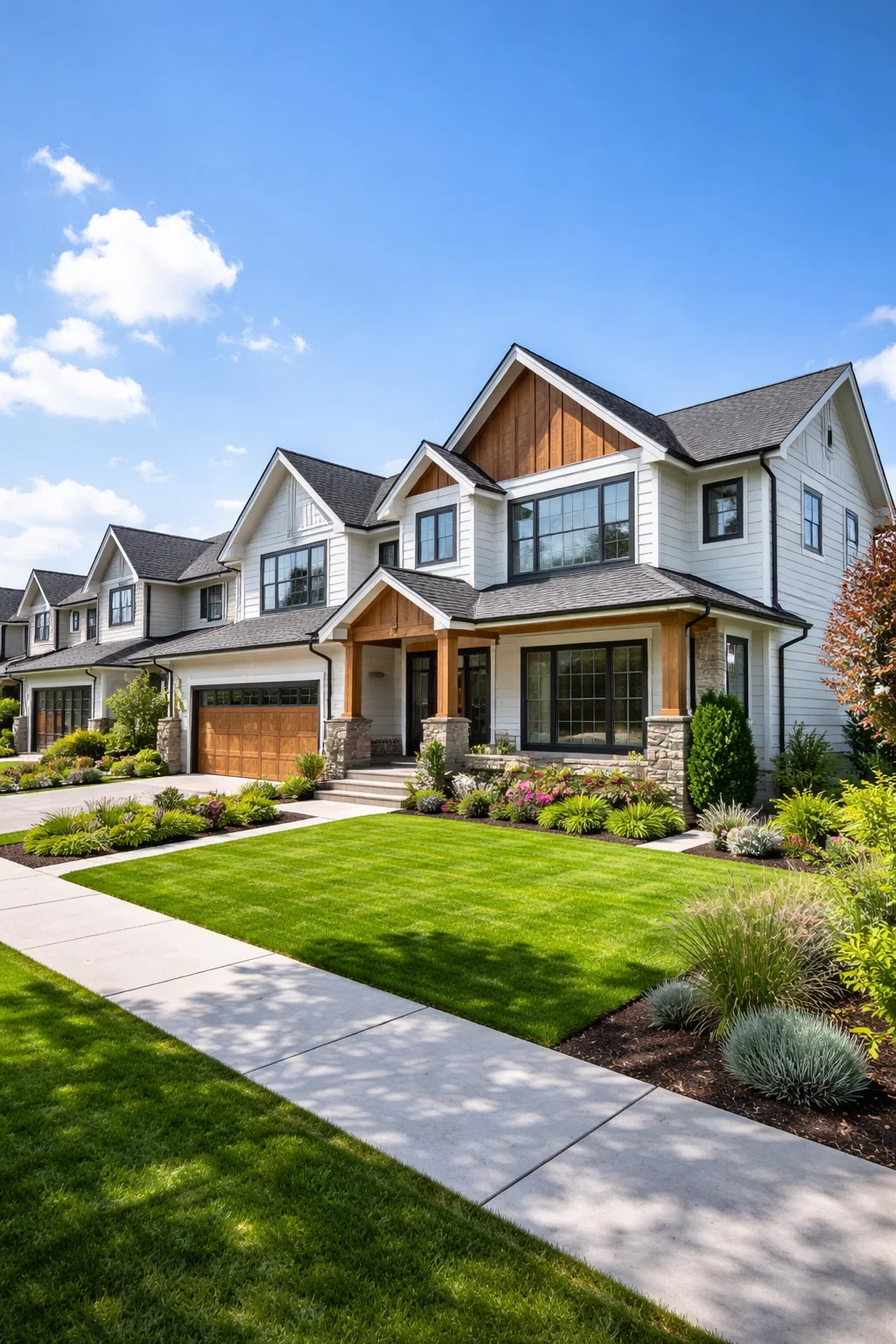
Neighborhood Is Everything in Austin's Rental Market
This page breaks down the cash flow math for Austin's ten most investable neighborhoods, side by side, with real occupancy data, average daily rate benchmarks, and estimated long-term rental income for each. Whether you are evaluating a new acquisition or deciding what to do with a property you already own, these numbers give you a starting point grounded in actual market performance.
Top TLDR:
Airbnb cash flow in Austin's top 10 neighborhoods outperforms long-term rentals by 40–120% gross, depending on location — but the gap varies dramatically by zip code. Zilker and East Austin lead on short-term revenue, while Round Rock and Cedar Park favor long-term stability. Use this neighborhood-by-neighborhood breakdown to match your Austin rental strategy to the market dynamics that actually fit your property.
Why Neighborhood Is Everything in Austin's Rental Market
Austin is not one market. It is ten markets layered on top of each other — each neighborhood driven by a different guest profile, demand cycle, and licensing reality. A blanket comparison of Airbnb versus long-term rentals misses the point entirely. A property in Zilker operates in a fundamentally different financial universe than one in Round Rock, even if both sit within the same metro area.
This page breaks down the cash flow math for Austin's ten most investable neighborhoods, side by side, with real occupancy data, average daily rate benchmarks, and estimated long-term rental income for each. Whether you are evaluating a new acquisition or deciding what to do with a property you already own, these numbers give you a starting point grounded in actual market performance.
For the broader strategic framework — including operating cost structure, licensing requirements, and how to choose between the two models — see our complete Airbnb vs. long-term rental ROI guide for Austin. This page is specifically about the neighborhood-level numbers.
How to Read These Comparisons
Each neighborhood profile below covers:
Short-Term Rental (STR): Average Daily Rate (ADR), typical occupancy range, and estimated gross annual revenue for a representative 2–3 bedroom property based on current market data.
Long-Term Rental (LTR): Current average monthly rent for comparable bedroom count and estimated gross annual income.
Verdict: Which strategy generally delivers better cash flow in that neighborhood, and why.
Net income will vary based on management approach, property condition, and operating costs. Professional STR management typically runs 20–25% of gross revenue. LTR property management runs 8–12% of monthly rent. These are gross comparisons — use them to directionally prioritize, not to model a specific deal.
1. Zilker — Austin's Highest-Earning STR Neighborhood
STR Data: ADR ~$442, peaking at ~$560 in October | Occupancy: 62–68% | Est. Annual Revenue (3BR): ~$95,000–$105,000
LTR Comparable: Average 2BR rent in Zilker/78704 corridor runs ~$2,200–$2,800/month | Est. Annual LTR Income: ~$26,400–$33,600
Verdict: Strong STR advantage. Zilker commands the highest ADR of any Austin neighborhood, driven by Austin City Limits (which takes place in Zilker Park), Barton Springs, and year-round outdoor tourism. October is the standout revenue month — nightly rates peak above $500 and occupancy approaches 70%. The STR premium over long-term rent is among the widest in the city, often 3x on a gross basis. Licensing complexity applies (Type 2 licenses face restrictions), so confirm your property's eligibility before underwriting. For properties that qualify, Zilker is one of Austin's most compelling STR investment cases.
2. East Austin — Culture-Driven Demand and Premium ADR
STR Data: ADR ~$378, peaking at ~$420 in March (SXSW season) | Occupancy: 62–70% | Est. Annual Revenue (2BR): ~$85,000–$95,000
LTR Comparable: Average 2BR rent in East Austin runs ~$1,800–$2,200/month | Est. Annual LTR Income: ~$21,600–$26,400
Verdict: Clear STR advantage. East Austin is the cultural epicenter of the city — art, food, bars, and proximity to downtown converge here in a way that draws guests willing to pay premium rates. March SXSW demand pushes ADR to its highest annual peak, and consistent year-round appeal keeps occupancy strong outside of event windows. LTR rates have softened in East Austin relative to peak years, making the STR advantage here particularly clear. This is a neighborhood where professional Airbnb management in Austin pays for itself through event-season pricing capture alone.
3. Downtown Austin — Highest Event-Season Potential, Type 1 Constraints
STR Data: ADR ~$322, peaking at ~$378 in March | Occupancy: 65–80%+ during peak periods | Est. Annual Revenue (2BR): ~$65,000–$80,000
LTR Comparable: Average 1–2BR rent downtown runs ~$1,849–$2,800/month | Est. Annual LTR Income: ~$22,200–$33,600
Verdict: STR advantage — with licensing caveats. Downtown Austin (zip 78701) sees some of the highest occupancy rates in the city, regularly hitting 80%+ during SXSW and Formula 1. But the licensing picture here is complex. Most downtown residential units fall under Type 2 STR licensing, which faces density restrictions in residential zones. Type 1 licenses (owner-occupied) are more accessible. If your unit qualifies and is properly licensed, the revenue upside is real — particularly for high-floor condos with city views that command event-weekend premiums. For investors buying specifically to STR downtown, thorough zoning research before purchase is essential.
4. South Congress (SoCo) — Stable Occupancy, Iconic Austin Appeal
STR Data: ADR ~$291, peaking at ~$335 in October | Occupancy: 60–70% | Est. Annual Revenue (2BR): ~$65,000–$75,000
LTR Comparable: Average 2BR rent in SoCo corridor runs ~$2,000–$2,400/month | Est. Annual LTR Income: ~$24,000–$28,800
Verdict: STR advantage, more balanced than Zilker/East Austin. South Congress is one of Austin's most recognized neighborhoods — boutique shopping, live music, and proximity to Zilker Park create consistent guest demand without extreme seasonal volatility. The ADR here is lower than Zilker or East Austin, but occupancy is steady and the guest profile is strong: leisure travelers who tend to respect properties and leave solid reviews. The STR-to-LTR income ratio is approximately 2.3–2.5x on a gross basis, making SoCo a strong candidate for owners looking for a favorable middle ground between income ceiling and stability.
5. Travis Heights — Quiet Premium, Surprising STR Returns
STR Data: ADR ~$338, peaking at ~$415 in October | Occupancy: 59–69% (peaks April) | Est. Annual Revenue (2BR): ~$68,000–$74,000
LTR Comparable: Average 2BR rent in Travis Heights runs ~$2,000–$2,500/month | Est. Annual LTR Income: ~$24,000–$30,000
Verdict: STR advantage, especially for well-designed properties. Travis Heights punches above its weight for short-term rentals. Its appeal — quiet, tree-lined streets, historic character, proximity to SoCo — attracts guests who want an upscale residential experience rather than downtown density. October is the peak revenue month, with ADR approaching $415. Occupancy is moderate year-round but spikes in spring (April performs well due to UT events and shoulder season demand). LTR rates here are solid but not exceptional, making the STR income gap meaningful for well-maintained, attractively staged properties.
6. Bouldin Creek — Luxury Rental Rates Support Both Strategies
STR Data: ADR ~$310–$370 | Occupancy: 60–67% | Est. Annual Revenue (2BR): ~$65,000–$78,000
LTR Comparable: Bouldin Creek is Austin's most expensive long-term rental neighborhood, averaging ~$3,390/month for a 2BR | Est. Annual LTR Income: ~$40,700
Verdict: Most balanced comparison in the city. Bouldin Creek is the one neighborhood in Austin where long-term rentals are genuinely competitive with short-term returns on a gross basis. LTR rates here are among the highest in the metro — significantly higher than most of 78704. For investors who prioritize low operational complexity and predictable income, the LTR case in Bouldin Creek is unusually strong. STR still outperforms on gross, but the gap is narrow enough that the reduced management burden of a long-term lease may tip the decision for some owners.
7. Hyde Park / University of Texas Area — Event Demand, Moderate ADR
STR Data: ADR ~$173, occupancy peaks at 68% in March | Occupancy: 55–68% | Est. Annual Revenue (1–2BR): ~$28,000–$42,000
LTR Comparable: Average 1BR rent in Hyde Park runs ~$1,050–$1,300/month | Est. Annual LTR Income: ~$12,600–$15,600
Verdict: STR advantage, with qualification. Hyde Park and the UT area are more affordable entry points to Austin's STR market, but the ADR here is the lowest of any neighborhood in this analysis. The STR income advantage over LTR remains meaningful — roughly 2x on gross — but the absolute revenue ceiling is lower. This neighborhood performs best for owners who self-manage or have access to low-cost management, because the thinner revenue base makes management fees a larger proportional drag. UT graduation weekends, game days, and SXSW keep occupancy consistent, but this is not a neighborhood where dynamic event-season pricing delivers dramatic spikes.
8. The Domain / North Austin — Business Travel Hub, Emerging STR Market
STR Data: ADR ~$180–$220 | Occupancy: 55–65% | Est. Annual Revenue (2BR): ~$38,000–$52,000
LTR Comparable: Average 2BR rent near The Domain runs ~$1,800–$2,100/month | Est. Annual LTR Income: ~$21,600–$25,200
Verdict: STR advantage, driven by weekday business demand. The Domain is Austin's tech employment hub, home to major Apple, Google, and Amazon campuses. This creates a steady weekday demand stream from business travelers and corporate relocations — a guest profile that is particularly well-suited to extended stays and mid-term rentals. STR ADR here is lower than central Austin, but occupancy is remarkably consistent year-round because it is not primarily event-driven. For investors interested in a hybrid approach — STR on weekends, mid-term corporate stays on weekdays — the Domain corridor deserves serious consideration. Our full-service Austin property management team manages properties across this corridor, including Cedar Park and Leander.
9. Round Rock — Long-Term Rental Stability Wins Here
STR Data: ADR ~$140–$180 | Occupancy: 50–58% | Est. Annual Revenue (2BR): ~$28,000–$36,000
LTR Comparable: Average 2BR rent in Round Rock runs ~$1,600–$1,900/month | Est. Annual LTR Income: ~$19,200–$22,800
Verdict: LTR is the stronger choice. Round Rock is a suburban market primarily driven by families, long-term professionals, and employees at Dell, Samsung, and other major employers. STR demand here is limited — there is no strong event-driven visitor economy, and the neighborhood character does not lend itself to premium nightly rates. The STR-to-LTR income gap is the narrowest in this analysis: roughly 1.4–1.6x gross. Once you factor in STR operating costs (cleaning, supplies, platform fees, management), the net income advantage nearly disappears. Round Rock is one of the few Austin-area locations where a well-managed long-term rental with low vacancy delivers competitive net returns with far less complexity.
10. Cedar Park — Suburban Fundamentals Favor Buy-and-Hold
STR Data: ADR ~$140–$175 | Occupancy: 48–58% | Est. Annual Revenue (2BR): ~$25,000–$34,000
LTR Comparable: Average 2BR rent in Cedar Park runs ~$1,600–$1,850/month | Est. Annual LTR Income: ~$19,200–$22,200
Verdict: LTR preferred for most investors. Cedar Park shares much of the same investment logic as Round Rock — strong school districts, reliable family tenant demand, and proximity to Austin's northern tech corridor. The STR market here is thin, occupancy is lower than urban neighborhoods, and ADR reflects modest visitor demand. Long-term vacancy rates in Cedar Park are among the lowest in the metro, and tenant retention is strong. For investors focused on predictable passive income with minimal operational burden, Cedar Park's LTR fundamentals are hard to argue with. Note that Cedar Park is within Sora Stays' Austin-area management coverage, so STR management is available here for owners who want to test the model.
Austin-Wide Cash Flow Summary
NeighborhoodSTR Est. Annual Gross (2BR)LTR Est. Annual Gross (2BR)STR/LTR RatioPreferred StrategyZilker$95K–$105K$26K–$34K~3.1xSTREast Austin$85K–$95K$22K–$26K~3.5xSTRDowntown$65K–$80K$22K–$34K~2.5xSTR (licensed)South Congress$65K–$75K$24K–$29K~2.5xSTRTravis Heights$68K–$74K$24K–$30K~2.5xSTRBouldin Creek$65K–$78K$41K~1.7xBalancedHyde Park / UT$28K–$42K$13K–$16K~2.3xSTR (qualified)The Domain$38K–$52K$22K–$25K~2.0xSTR / HybridRound Rock$28K–$36K$19K–$23K~1.5xLTRCedar Park$25K–$34K$19K–$22K~1.4xLTR
All figures are gross annual income estimates for a 2-bedroom property based on current market data. Net cash flow varies based on operating costs, management fees, and financing.
The Single Most Important Factor: Operating Cost Relative to Revenue
The gross income comparisons above are only half the picture. Where STR operating costs consume 35–45% of gross revenue, and LTR costs run 15–20%, the neighborhoods with the highest gross multiples — Zilker, East Austin — remain decisively STR-favorable even on a net basis. The neighborhoods where the gross multiple is closer to 1.5–1.7x (Bouldin Creek, Round Rock, Cedar Park) may actually flip to LTR-preferred on a net basis once you account for the operational overhead of short-term management.
This is why understanding your specific cost structure matters as much as knowing the market rates. A professionally managed STR with 20% management fees, regular cleaning costs, and supply budgets looks different on a net basis than the gross numbers suggest. For a full breakdown of how operating costs affect net cash flow by property type, our short-term rental market analysis and management strategies guide walks through the math in detail.
What This Means for Your Austin Investment Decision
Use this data to narrow your shortlist, not to make a final decision. Neighborhood-level averages mask meaningful variation — a poorly staged property in Zilker will underperform a beautifully managed listing in South Congress. Management quality, pricing strategy, and licensing status each affect actual performance more than market averages alone suggest.
If your property is in a high-multiple STR neighborhood (Zilker, East Austin, Downtown), the case for short-term rental management is strong and the numbers support it clearly. If your property is in a suburban or transitional market (Round Rock, Cedar Park), run the net cash flow comparison carefully before committing to the STR infrastructure and compliance costs.
And if you are still deciding what to do with an Austin property — or evaluating a new purchase — the Sora Stays team offers free property-level revenue projections. We manage properties across Austin's urban core and surrounding areas, including Lake Travis, Dripping Springs, Georgetown, and the Hill Country, and can give you a direct read on what your specific property is likely to earn under professional short-term rental management. You can also review what Austin's vacation rental market looks like in full detail before making any decisions.
For Austin property owners considering compliance first — a smart move before anything else — our guide to Airbnb laws and regulations in Austin covers every license type, renewal requirement, and tax obligation that applies to your situation.
Bottom TLDR:
Cash flow from Airbnb in Austin's top neighborhoods beats long-term rentals by 2–3.5x gross in markets like Zilker, East Austin, and South Congress — but narrows to near parity in suburban zones like Round Rock and Cedar Park, where long-term rental stability often wins on a net basis. Match your strategy to your neighborhood, then request a free property-level revenue estimate from a local Austin management team to see the real numbers for your specific address.
Full-Service Luxury STR Management
What We Offer:
Listing optimization across Airbnb, VRBO, and more
Professional staging and design guidance to capture attention
Dynamic pricing to stay competitive in Austin’s fast-paced market
24/7 guest communication with a hospitality-first approach
On-the-ground operations: cleaning, restocking, inspections, and maintenance
Owner reporting with clear monthly financials and performance tracking
Work with a Top-Rated Austin Airbnb Cohost
If you're searching for the best Airbnb cohost in Austin, a trusted partner for vacation rental management, or a professional solution for Airbnb property management in Austin, you've found it.
Sora Stays is built to serve discerning property owners who want maximum revenue and minimum effort.
Work with a Top-Rated Austin Airbnb Cohost
Let’s discuss how we can elevate your property and simplify your hosting experience. Reach out today and see why we’re Austin’s leading luxury short-term rental management company.
Why Choose Sora Stays as Your Airbnb Cohost in Austin?
From East Austin condos to Hill Country estates, we handle every detail of your rental with five-star precision. Our local expertise, hands-on approach, and luxury hospitality standards make us the trusted choice for vacation rental property management in Austin.
We’re more than just Airbnb cohosts—we’re strategic partners dedicated to protecting your asset, enhancing guest experience, and optimizing profitability.